
Interior vs Exterior Wall Paint: Key Differences Explained
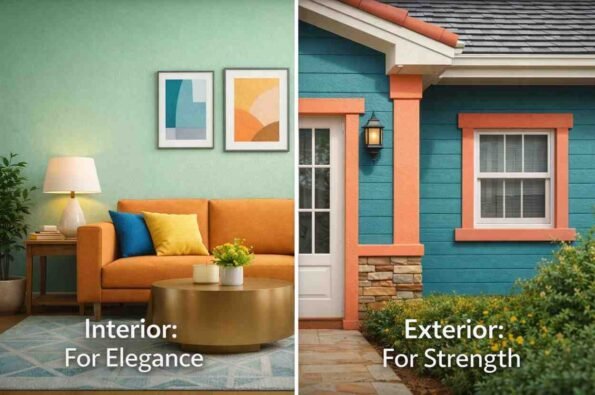
Choosing the right wall paint is one of the most important decisions when building, renovating, or refreshing a home. While many homeowners focus mainly on colour, the real difference lies in selecting the correct type of paint — interior or exterior. Using the wrong paint in the wrong place can lead to peeling, fading, moisture damage, and unnecessary repainting costs.
This detailed guide explains interior vs exterior wall paint, their key differences, uses, benefits, and how to choose the right one for Indian homes and weather conditions. Whether you’re repainting a single room or giving your entire house a makeover, this blog will help you make an informed choice.
What Is Interior Wall Paint?
Interior wall paint is specially formulated for indoor surfaces such as living rooms, bedrooms, kitchens, and ceilings. These paints are designed to enhance aesthetics, comfort, and indoor air quality.
Key Purpose of Interior Paint
- Improve the visual appeal of interiors
- Provide smooth, elegant finishes
- Offer easy maintenance and washability
- Ensure safe indoor air quality
Interior paints focus more on appearance, texture, and comfort rather than weather resistance.
What Is Exterior Wall Paint?
Exterior wall paint is designed for outside surfaces of buildings that are constantly exposed to harsh environmental conditions like sunlight, rain, dust, humidity, and pollution.
Key Purpose of Exterior Paint
- Protect walls from weather damage
- Prevent cracks, dampness, and fungal growth
- Maintain colour despite heat and rain
- Enhance curb appeal
Exterior paints act as a protective shield for your home.
Interior vs Exterior Wall Paint: The Core Difference
Although both are paints, interior and exterior wall paints are not interchangeable. Their composition, durability, finish, and performance are completely different.
Using interior paint outdoors will result in fast damage, while exterior paint indoors may cause strong odour and health issues.
1. Composition & Ingredients
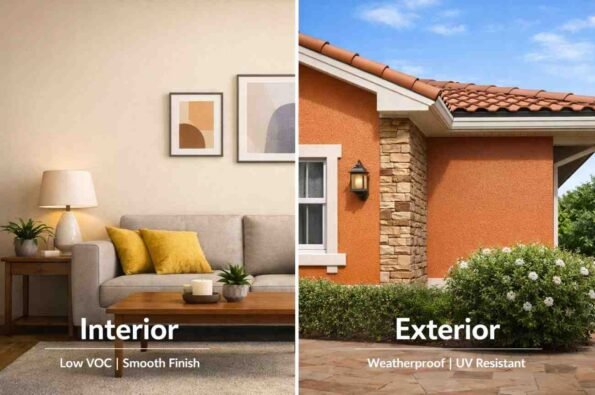
Interior Wall Paint Composition
Interior paints are made with:
- Low-VOC (Volatile Organic Compounds)
- Mild binders
- Softer resins
- Minimal chemical additives
These ingredients ensure:
- Low odour
- Safe indoor air quality
- Smooth texture
Exterior Wall Paint Composition
Exterior paints contain:
- Strong binders and resins
- UV-resistant pigments
- Waterproofing agents
- Anti-fungal and anti-algal chemicals
These additives help exterior paint withstand extreme weather conditions.
👉 Key Difference: Exterior paint is chemically stronger and more durable than interior paint.
2. Durability & Lifespan
Interior Paint Durability
Interior paints are durable enough to handle:
- Daily wear and tear
- Light cleaning
- Furniture movement
However, they are not meant to handle moisture or sunlight exposure.
Typical lifespan:
- 3–5 years (depending on usage and quality)
Exterior Paint Durability
Exterior paints are built to withstand:
- Intense sunlight
- Heavy rainfall
- Temperature changes
- Pollution and dust
Typical lifespan:
- 5–10 years with proper application
👉 Key Difference: Exterior paint lasts significantly longer due to stronger protection.
3. Resistance to Weather & Moisture
Interior Wall Paint
- Not waterproof
- Can peel in damp areas
- Limited moisture resistance (except kitchen/bathroom variants)
Exterior Wall Paint
- High water resistance
- Prevents damp patches
- Protects walls from seepage
👉 Key Difference: Exterior paint is moisture-resistant; interior paint is not.
4. UV & Sunlight Protection
Interior Paint
Interior paints are not exposed to direct sunlight, so:
- Minimal UV protection
- Colours may fade if used outdoors
Exterior Paint
Exterior paints include:
- UV blockers
- Fade-resistant pigments
This ensures long-lasting colour even under harsh sunlight.
👉 Key Difference: Exterior paint protects against sun damage; interior paint does not.
5. Finish Options Available
Interior Wall Paint Finishes
Interior paints offer a wide range of decorative finishes:
- Matte
- Silk
- Lustre
- Satin
- Gloss
These finishes enhance:
- Room aesthetics
- Light reflection
- Texture appeal
Exterior Wall Paint Finishes
Exterior paints focus more on protection:
- Matt or low-sheen
- Rough or textured finishes
- Weatherproof coatings
👉 Key Difference: Interior finishes focus on beauty, exterior finishes focus on protection.
6. Washability & Maintenance
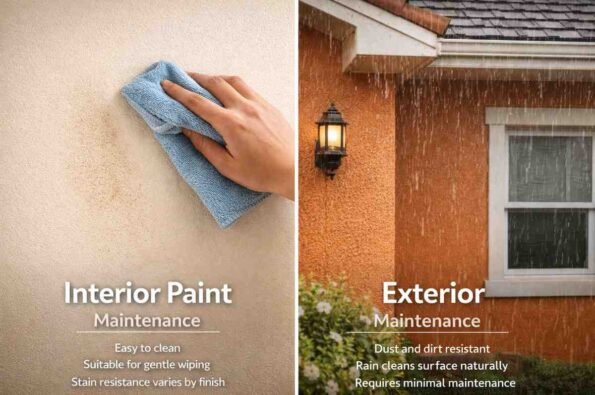
Interior Paint Maintenance
- Easy to clean (especially washable paints)
- Suitable for gentle wiping
- Stain resistance varies by finish
Exterior Paint Maintenance
- Dust and dirt resistant
- Rain cleans surface naturally
- Requires minimal maintenance
👉 Key Difference: Exterior paint is low-maintenance compared to interior paint.
7. Health & Safety Considerations
Interior Wall Paint
Interior paint is designed to be:
- Low odour
- Low VOC
- Safe for children and elders
This makes it ideal for bedrooms, living rooms, and kitchens.
Exterior Wall Paint
Exterior paints may contain:
- Stronger chemicals
- Higher VOC levels
- Strong smell during application
Hence, they are not recommended for indoor use.
👉 Key Difference: Interior paints prioritize health; exterior paints prioritize strength.
8. Colour Selection & Appearance
Interior Wall Paint Colours
Interior colours focus on:
- Mood enhancement
- Space perception
- Personal style
Examples:
- Pastels for calm
- Bright shades for energy
- Neutrals for elegance
Exterior Wall Paint Colours
Exterior colours focus on:
- Heat reflection
- Fade resistance
- Long-term appearance
Examples:
- Light shades for heat reduction
- Earthy tones for dust resistance
👉 Key Difference: Interior colours focus on emotions; exterior colours focus on endurance.
9. Cost Comparison
Interior Wall Paint Cost
- Generally more affordable
- Depends on finish and brand
- Frequent repainting required
Exterior Wall Paint Cost
- Slightly expensive
- Higher durability reduces repainting frequency
- Long-term cost-effective
👉 Key Difference: Exterior paint costs more initially but saves money over time.
Room-wise Use of Interior Paint
Living Room
- Matte or lustre finish
- Warm or neutral colours
- Easy-to-clean surfaces
Bedroom
- Low-sheen finishes
- Calming colours
- Low-VOC paints
Kitchen
- Washable interior paint
- Moisture-resistant options
Bathroom
- Anti-fungal interior paints
- Semi-gloss finish
Where Exterior Paint Is Essential
- Outer walls
- Boundary walls
- Terrace walls
- Balconies
- Exterior ceilings
Using interior paint in these areas will lead to rapid deterioration.
Can Exterior Paint Be Used Indoors?
Technically, yes — but it is not recommended.
Reasons:
- Strong smell
- Health risks
- Poor indoor air quality
- Unnecessary chemical exposure
Always use paint according to its purpose.
Role of Primer in Interior vs Exterior Painting
Interior Primer
- Smoothens surface
- Enhances paint finish
- Improves adhesion
Exterior Primer
- Seals wall pores
- Prevents moisture entry
- Increases paint life
Primer selection is as important as paint selection.
How to Choose the Right Paint for Your Home
Ask yourself:
- Is the surface indoors or outdoors?
- Is it exposed to moisture or sunlight?
- Do I want decoration or protection?
- What is my long-term maintenance plan?
Answering these questions helps in choosing the right paint system.
Why Paint Choice Matters for Indian Homes
Indian homes face:
- High heat
- Heavy monsoons
- Dust and pollution
Choosing the wrong paint leads to:
- Peeling
- Cracks
- Damp walls
- Frequent repainting
The right paint ensures durability and comfort.
Why Choose Quality Paint Brands Like Mithila Paints
A trusted brand ensures:
- Better coverage
- Long-lasting finish
- Weather protection
- Value for money
Quality paints reduce long-term maintenance costs and enhance home beauty.
Interior vs Exterior Wall Paint: Quick Comparison Table (Textual)
Interior Paint:
- Aesthetic-focused
- Low VOC
- Smooth finish
- Indoor use only
Exterior Paint:
- Protection-focused
- Weather-resistant
- Strong binders
- Outdoor use only
Final Thoughts: Interior vs Exterior Wall Paint
Understanding the difference between interior vs exterior wall paint is crucial for long-lasting results. Each paint type is engineered for a specific purpose, and using the right one ensures beauty, durability, and protection.
Interior paints enhance comfort and aesthetics, while exterior paints guard your home against nature. Making the right choice today saves money, effort, and frustration in the future.
A beautiful home is not just about colours — it’s about choosing the right paint for the right surface. Whether you’re refreshing interiors or protecting exteriors, understanding paint differences empowers you to make smarter decisions.
Choose wisely. Paint smart. Build lasting beauty.