
In modern interior and exterior design, plain painted walls are slowly being replaced by surfaces that tell a story. Homeowners today want walls that look rich, artistic, and premium—without relying on expensive stone cladding or wallpapers. This is where texture paint comes into the picture. Texture paint has become one of the most popular wall-finishing solutions because it adds depth, character, and durability to walls while also hiding imperfections.

But a common question many homeowners and first-time buyers ask is: how does texture paint actually work? Unlike regular paint, texture paint involves materials, techniques, and surface preparation that are slightly different yet extremely effective. Understanding how texture paint works helps you choose the right finish, apply it correctly, and maintain it for years.
In this detailed guide, we will explore what texture paint is, how it works on walls, the materials involved, application methods, types, benefits, durability, maintenance, and why it is worth the investment for modern homes.
What Is Texture Paint?
Texture paint is a decorative wall coating designed to create a raised, patterned, or rough surface on walls. Unlike normal emulsion paints that provide a smooth and flat finish, texture paints contain special aggregates, fillers, or granules that give walls a three-dimensional effect.
These paints are thicker than regular paints and are applied using specialized tools such as rollers, trowels, knives, or brushes. The result is a visually appealing surface that can resemble natural materials like stone, marble, sand, concrete, or fabric.
Texture paint is commonly used on:
- Accent walls in living rooms
- Exterior building façades
- Staircase walls
- Hotel lobbies and commercial spaces
- Feature walls in bedrooms and offices
How Does Texture Paint Work on Walls?
Texture paint works by building layers and creating controlled surface irregularities. The process is both chemical and mechanical.
At its core, texture paint contains:
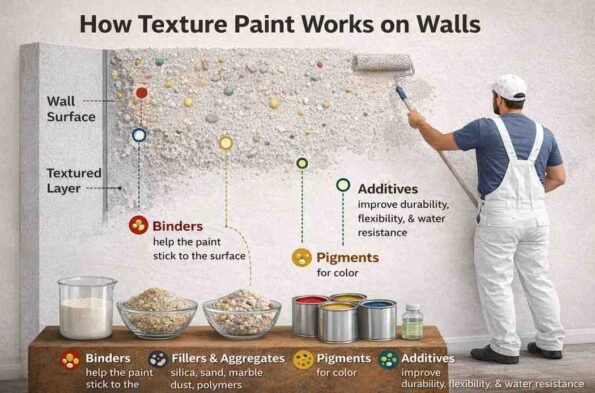
- Binders (usually acrylic-based) that help the paint stick to the surface
- Fillers and aggregates like silica, sand, marble dust, or polymers
- Pigments for color
- Additives that improve durability, flexibility, and water resistance
When applied to a wall, the thick consistency of the paint allows it to hold shapes and patterns instead of leveling out like normal paint. The applicator deliberately manipulates the paint using tools to create texture. Once the paint dries, the binders harden and lock the texture in place.
In simple terms, texture paint works by:
- Creating a thick paint layer on the wall
- Shaping or designing that layer before it dries
- Allowing the surface to cure into a durable, decorative finish
The Science Behind Texture Paint Adhesion
One of the key reasons texture paint performs so well is its strong adhesion capability. Texture paints are designed to bond firmly with plaster, cement, putty, concrete, and primed surfaces.
The acrylic or polymer binders penetrate microscopic pores in the wall surface. As the paint dries, these binders form a tight film that grips the wall. This is why proper surface preparation and priming are essential—without them, the texture may peel or crack over time.
Because texture paint is thicker and heavier, it requires a stable base. Once bonded correctly, it becomes far more durable than standard paint.
Surface Preparation: The Foundation of Texture Paint Performance
Texture paint works best only when the wall beneath it is properly prepared. Surface preparation plays a critical role in ensuring long life and flawless finish.
Before texture paint is applied:
- The wall must be clean, dry, and free from dust, grease, or loose particles
- Cracks, holes, or damp patches should be repaired
- A suitable primer or base coat must be applied
The primer helps in two ways. First, it improves adhesion by creating a uniform surface. Second, it prevents the wall from absorbing moisture unevenly from the texture paint, which could otherwise lead to cracks or discoloration.
Without proper preparation, even the best texture paint will not perform as expected.
Application Process: How Texture Paint Is Applied
Texture paint works through controlled application techniques rather than simple brushing. The method used depends on the type of texture desired.
Initially, the paint is applied in a thick layer using a roller, trowel, or spatula. At this stage, the paint is still soft and workable. This is when patterns are created. The applicator may use tools to swirl, scrape, dab, or level the surface in specific ways.
Once the texture is shaped, the paint is left to dry and cure. Drying time can range from a few hours to 24 hours, depending on thickness, weather, and product type.
After drying, an optional topcoat or glaze may be applied to enhance color, sheen, or weather resistance.
Types of Texture Paint and How Each Works
Different texture paints work in different ways based on their composition and application style.

Sand Texture Paint
Sand texture paint contains fine sand particles that create a grainy, natural look. When applied, the sand particles remain suspended in the binder, forming a rough yet uniform surface once dry. This type works well for hiding minor wall imperfections.
Marble or Stone Texture Paint
This type uses marble chips or stone granules. The paint works by forming a layered stone-like finish that closely resembles natural stone surfaces. It is commonly used for luxury interiors and exteriors.
Knockdown Texture
Knockdown texture works by applying a thick layer and then partially flattening it using a knife or trowel. This creates a soft, irregular pattern that adds depth without being too bold.
Metallic Texture Paint
Metallic texture paints contain reflective pigments. They work by catching and reflecting light differently across raised surfaces, giving walls a rich, shimmering effect.
Rustic and Concrete Texture
These paints work by mimicking raw cement or industrial finishes. Their coarse particles and matte binders create a modern, urban aesthetic.
How Texture Paint Hides Wall Imperfections
One of the biggest advantages of texture paint is its ability to conceal flaws. Unlike smooth paint, which highlights cracks and uneven surfaces, texture paint distracts the eye with patterns and depth.
The raised surface scatters light unevenly, making small dents, patches, and hairline cracks less noticeable. This makes texture paint an excellent solution for older homes or walls that are difficult to level perfectly.
Durability and Protection: How Texture Paint Adds Strength
Texture paint is not just decorative; it also works as a protective layer. Its thickness provides additional resistance against:
- Minor impacts and scratches
- Weather conditions (for exterior use)
- Moisture and humidity
- Fungal and algae growth (when antifungal additives are present)
Exterior texture paints are specially formulated to withstand UV rays, rain, and temperature changes. This makes them far more durable than regular exterior paints.
How Texture Paint Performs in Indian Climate
In regions with high humidity, heat, and monsoons, texture paint performs exceptionally well when applied correctly. The thick coating acts as a barrier against moisture penetration, reducing issues like dampness and peeling.
For coastal or high-rainfall areas, weather-resistant texture paints with waterproof properties work best. Proper curing time and sealing ensure long-lasting performance.
Maintenance: How Texture Paint Ages Over Time
Texture paint works differently than smooth paint when it comes to maintenance. While it does not require frequent repainting, cleaning textured walls needs gentle handling.
Dust tends to settle in grooves, so periodic dusting or light vacuuming is recommended. For exterior walls, occasional water washing helps maintain appearance.
When maintained properly, texture paint can last 7 to 10 years or more, depending on product quality and exposure conditions.
Cost vs Value: Is Texture Paint Worth It?
Although texture paint costs more than regular paint, it offers greater value over time. The durability, low maintenance, premium appearance, and ability to hide imperfections reduce long-term expenses.
It eliminates the need for wall coverings, stone cladding, or frequent repainting, making it a cost-effective decorative solution.
Why Texture Paint Is Popular in Modern Homes
Texture paint works perfectly with modern design trends that favor minimalism with character. It allows homeowners to create focal points without overcrowding spaces.
Architects and designers prefer texture paint because it provides flexibility in design while maintaining structural simplicity.
Final Thoughts: Understanding How Texture Paint Works
Texture paint works by combining science, material engineering, and skilled application techniques to transform ordinary walls into visually striking surfaces. Its thick composition, strong adhesion, and customizable textures make it a powerful decorative tool for both interiors and exteriors.
By understanding how texture paint works—from preparation to application and maintenance—you can make informed decisions and achieve long-lasting, elegant wall finishes that elevate your space.
Whether you want a subtle texture or a bold statement wall, texture paint offers endless possibilities to redefine how your walls look and feel.